Churros for the hospitality industry: how to choose, serve, and make them profitable

If you run a café, bar, or hotel and want to offer churros and porras without setting up a churrería, the most practical solution is ultra-frozen churros: they can be fried without thawing, come out with uniform size and weight, and are ready to serve in minutes. This guide explains what sets churros apart from porras, how to prepare them so they always turn out the same at 8:00 as they do at 11:00, how to store them in compliance with Spanish regulations, and what criteria to use when choosing a supplier. We are KingChurro, based in Granada, and we serve the hospitality industry and private customers throughout Spain.
In summary
- Ultra-frozen churros can be fried directly from the freezer at around 200 ºC in about 2/3 minutes. You don't need a churro press or mixer.
- Porras use a different dough and have a different texture: you can offer both on the same menu and vary the price per serving.
- In the establishment, the frozen product must be kept at -18 ºC or below and thawed, if necessary, in compliance with Royal Decree 1021/2022.
- The margin is calculated using a detailed cost analysis: product, oil, energy, accompaniments (chocolate, syrup, filling), and serving size.
- Choose a supplier based on product consistency, box size, delivery, and the variety of accompaniments, not just the price per kilo.
Table of contents
- Why frozen churros are a good fit for a café or hotel
- Churros and porras: what are the differences and which one to serve
- How to prepare them so they always turn out the same
- Storage and handling in your establishment
- What equipment you need and what you don't
- Profitability: how to calculate the numbers for churros
- What to look for when choosing a churro supplier for the hospitality industry
- What we think from Granada
- Try the range for your kitchen
- Frequently asked questions
- Sources
Why frozen churros are a good fit for a café or hotel
A proper churrería requires waking up early, kneading dough, having a churro press, a large fryer, and staff who know how to work the dough. That makes sense if your business is churros. If your business is breakfast, an afternoon snack, or dessert, what you need is a product that works at any time, with any cook, and without waste.
Ultra-frozen churros solve exactly that. The dough comes pre-made, shaped, and ready to fry. Your team doesn't need to portion it out or calculate resting times: take out the amount you need, fry it, and serve it. With a standard fryer, a hotel kitchen can have golden churros at the breakfast buffet without adding a new workstation.
We see three situations where they fit best:
- Neighborhood cafés and bars that want to expand their breakfast and snack menus without investing in machinery.
- Hotels and holiday apartments with breakfast included, where production needs to be uniform and fast, with concentrated demand peaks.
- Venues with terraces, events, or catering where food is served in batches and replenishment needs to be easy. If you are interested in this format, we have a page on events.
An ultra-frozen product also helps plan purchases. It can be stored in the freezer for longer, and the order can be adjusted to the actual weekly consumption. To expand on this point, we have a guide on ultra-frozen churros for the hospitality industry.
Churros and porras: what are the differences and which one to serve
On a venue's menu, it is best to offer both options, because they are not the same product and attract different customers.
According to eldiario.es, churros are made with water, flour, and salt and require little resting time, while porras add a leavening agent, such as baking soda or yeast, and need to rest to ferment slightly. The result is a more airy and spongy porra. Physically, churros are usually thinner and have more pronounced ridges, while porras are thicker and more uniform.
El Corte Inglés, in its guide to frozen churros and porras, notes that porras are wider, longer, and fluffier, with more water in the dough and more resting time before frying.
| Churro | Porra | |
|---|---|---|
| Dough | Water, flour, and salt | Add leavening agent (baking soda or yeast) |
| Texture | Crispy, pronounced ridges | More airy and spongy |
| Shape | Thinner | Thicker and more uniform |
| Typical serving | Portion for dipping in chocolate | More generous portion, breakfast |
| Best fit | Afternoon snack, terrace, buffet | Weekend breakfast, café menu |
A practical idea: for breakfast, porras work well because their size gives the impression of a generous portion and they are easy to break and share. For an afternoon snack and dessert, a thin churro with syrup or cream looks better. In our collection of churros and porras, you have both formats for the hospitality industry.
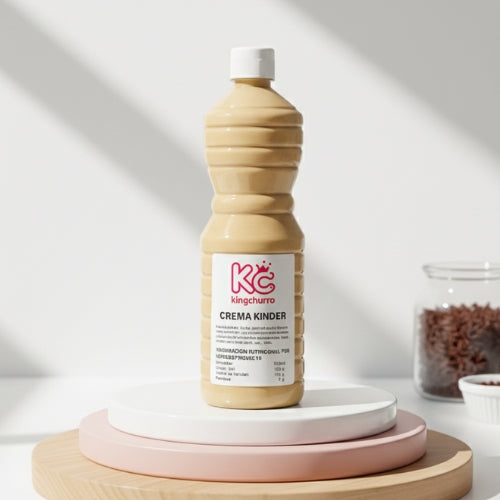
You can also go beyond the classic churro. A filled churro or a cream accompaniment turns a simple portion into a dessert with its own price point. For example, our 1.2 L Oreo-style Crunchi cream is designed as a filling for the hospitality industry.

How to prepare them so they always turn out the same
Uniformity is what the customer notices. A soft churro one day and a crispy one the next does more damage than not having churros at all. These are the most important guidelines.
Frying
According to the Mercadona guide to churros and porras, frozen churros are fried without thawing in oil at 180 ºC for 2 and a half to 3 minutes, until golden. Their expert advice is to fry in small batches to maintain the oil temperature and prevent them from sticking together.

In a hospitality service, this translates into a simple rule: fry in batches that sell in a few minutes, not a huge basket that lowers the oil temperature and leaves you with a greasy churro. If your fryer takes a long time to recover its temperature, reduce the batch size instead of extending the frying time.
A useful fact: according to Directo al Paladar, professional frying is around 200-220 degrees, a temperature that is difficult to reach in a home kitchen. A professional fryer with a thermostat is part of the difference between a home result and that of an establishment.
Porras without a fryer
The same Mercadona guide indicates that frozen porras can be prepared without thawing in a toaster for 2 to 3 minutes, in an oven at 190 ºC for 3 to 4 minutes, or in an air fryer at 200 ºC for 5 to 7 minutes. For a hotel that wants to offer porras in a corner of the buffet or in rooms, the toaster or convection oven is a convenient option. Each product comes with its own instructions on the packaging, and it is best to follow them with the specific equipment in your kitchen.
Five-step cooking protocol
- Take out of the freezer only what you are going to fry in the next batch.
- Check that the oil is at 180 ºC with a thermometer, not by eye.
- Fry in small batches, without overloading the basket.
- Drain on a rack or absorbent paper and serve immediately.
- Filter and replace the oil according to the volume of service, to maintain consistent flavor and color.
Writing this protocol and leaving it visible next to the fryer is what makes the churro from the afternoon shift come out the same as the one from the morning.
Storage and handling in your establishment
In Spain, Royal Decree 1021/2022 establishes that frozen or ultra-frozen foods in retail establishments must be kept at a temperature equal to or below -18 ºC. The regulation includes catering and the hospitality industry.
Regarding thawing, the same text indicates that it must be done in refrigeration, avoiding cross-contamination and contact with thawing liquids. Only for duly justified technological reasons can it be done at room temperature, or in the microwave, or with running cold water if the food is cooked immediately afterward.
The advantage of an ultra-frozen churro is that it can be fried directly from the freezer, so the issue of thawing hardly appears in daily life. What you should take care of:
- Freezer with a thermometer and periodic temperature checks.
- Stock rotation: first in, first out.
- Closed containers after opening the box, to protect the product.
- Staff training in food hygiene, which the Royal Decree requires for anyone who handles food, according to Envapro.
The food safety requirements guide from the USAL Foundation summarizes the points checked by any inspection in catering: facilities and equipment, water, good hygiene practices, reception and storage of raw materials, cleaning and waste, traceability and supplier control, training, pest control, and consumer information. A supplier that provides you with clear labeling and traceability saves you work in that area. If you have specific doubts about your establishment, consult the health service of your city council or autonomous community, or your food safety consultant.
What equipment you need and what you don't
Setting up a full churrería requires investment. According to Envapro, a professional churrería needs at least a churro press or dispenser, a professional fryer with appropriate boiler capacity, power, and heating, and a mixer when the volume of dough grows, in addition to trays, strainers, work tables, scales, thermometers, and refrigeration.
With ultra-frozen churros, the list is significantly reduced:
| Equipment | Churrería from scratch | With ultra-frozen product |
|---|---|---|
| Mixer | Yes, as volume grows | No |
| Churro press or dispenser | Yes | No |
| Fryer | Yes, professional | Yes (the one in your kitchen, with a thermostat) |
| Freezer | Optional | Yes, at -18 ºC or below |
| Strainer and thermometer | Yes | Yes |
| Hot display | Depending on the menu | Optional |
If you already have a kitchen with a fryer, the jump to offering churros is minimal. And if you only want porras for the hotel breakfast, a toaster or oven may be enough, depending on the format.
If what you want is to make your own dough in small quantities, we also have a 20 cm churro press, designed for home use and as a supplement.
Profitability: how to calculate the numbers for churros
The churro is a simple product with a good margin when calculated correctly. An example from the press: El Español tells the story of a churrería with over 20 years of history that achieves a profitability of over 50% and sells up to 400 servings daily on weekends. It is a specialized churrería, not a café, but it illustrates the potential of the serving.
For your establishment, what is useful is your own detailed cost analysis. According to Miselup, the cost analysis of a tapa must include ingredients and costs such as absorbed oil, oil replenishment, and energy, and it is best to compare tapa, half-serving, and full-serving formats.
Let's apply it to churros, without inventing figures. The concepts you should add are:
- Product cost per serving: weight of the serving divided by the units in the box and its price.
- Oil: absorbed by the churro plus fryer replenishment.
- Energy: gas or electricity per batch.
- Accompaniment: chocolate, syrup, cream, or filling per serving.
- Packaging and service: glass, small glass, napkin, plate.
With that sum you have the real cost and you can set the price. Miselup also reminds, quoting John Guerrero, that by increasing the size of the serving the food cost can go up and still the absolute gross margin can grow, and that the price must balance the customer's perception of value with profitability.
Three practical levers to improve margin:
- Formats: offer half portions for snacks and full portions for breakfast.
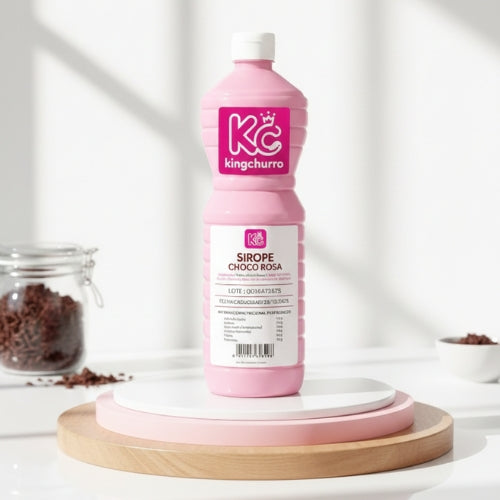
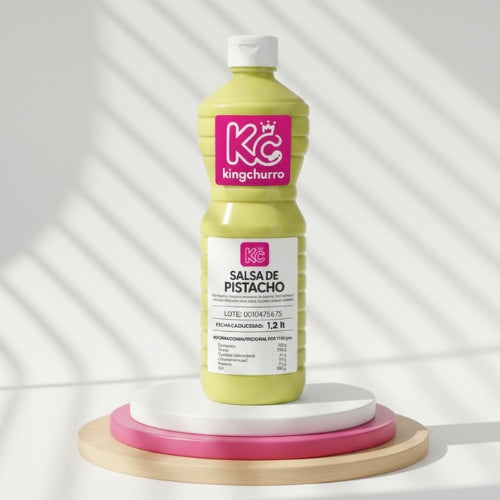
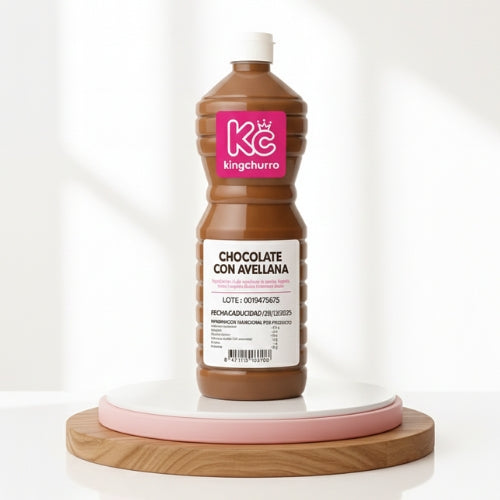
- Accompaniments: hot chocolate or syrup is charged separately and increases the average ticket. You have hot chocolate and creams, syrups and sauces for this.
- Star product: a filled churro or a porra with topping becomes a dessert on the menu with its own price.
Don't forget to expand the menu with other frozen foods that use the same quick service logic: waffles, crepes and pancakes, available in our frozen food collection. With a single supplier, a single order and a single warehouse you cover breakfast, snack and dessert.
What to look for when choosing a churro supplier for hospitality
When comparing suppliers, forget the temptation to look only at the price per kilo. The criteria that most affect your day-to-day are these:
- Product consistency: size, weight and frying point equal box after box. It is what guarantees uniform portions and reliable food costs.
- Box format and replenishment: boxes you can store and replenish easily, with quantities according to your consumption.
- Clear preparation instructions: time, temperature and equipment, so that any employee does it well.
- Delivery and deadlines: an order that arrives within the promised timeframe and with the cold chain intact.
- Complete range: churros, porras, filled, syrups, chocolate. Fewer suppliers means less management.
- Traceability and labeling: what the regulations require and what an inspection will check.
We have two guides that develop these points: one on what to look for in a churro supplier for cafes and another on buying frozen churros wholesale. If what interests you is to serve quickly, you also have the one of churros ready to serve in hospitality.
What we think from Granada
When we started, the question of the hoteliers was always the same: how to offer a churro that looks like it comes from a churro shop without having a churro shop behind it. Our answer is to start from traditional recipes supervised by master churro makers, work with quality raw materials and rely on ultra-freezing so that the product reaches your kitchen with its freshness and its flavor.
What we value most in a venue is uniformity. That is why we think about uniform portions and easy replenishment: you open the box, fry, serve and repeat with the same result. Thus the morning shift and the afternoon shift offer the same, and the customer orders again.
From Granada we prepare orders for hospitality and for individuals, with fast and insured delivery throughout Spain. And since a churro sells more with good accompaniment, we complete the range with hot chocolate, premium syrups and filling creams. A single supplier, a full breakfast and dessert menu.
King
Try the range for your kitchen
If you want to set up or improve your churro menu, start with our collection of artisan frozen churros and porras: made with traditional recipes, ready to fry in minutes and designed for hospitality. To know the entire range before deciding quantities, you also have the professional assorted tasting lot.

If you prefer to see it all together, enter kingchurro.es and add to the order churros, porras, waffles, crepes, pancakes, chocolate and syrups in a single purchase.
Frequently asked questions
Can frozen churros be fried without thawing?
Yes. According to Mercadona, frozen churros are fried directly in oil at 180 ºC for about 2 and a half to 3 minutes. It is advisable to fry in small batches so that the oil does not lose temperature. Always follow the instructions on your product packaging.
At what temperature should I store frozen churros in my venue?
At -18 ºC or less, according to the Royal Decree 1021/2022. If you need to thaw, do it in refrigeration and avoid cross-contamination. Check the temperature of your freezer with a thermometer periodically.
What do I need to serve porras at a hotel breakfast?
It depends on the format, but frozen porras can be prepared in a toaster, oven or air fryer, as indicated by El Corte Inglés. There is no need for a churro maker or mixer. Add a good hot chocolate or a syrup and you will have a breakfast corner solved.
How much margin do churros leave in a cafe?
It depends on your cost per portion, the oil, the energy and what you charge for the accompaniment. Make your own food cost with those concepts and compare half portion and full portion formats. A churro with chocolate or syrup separately usually increases the average ticket.
Do you ship churros for hospitality throughout Spain?
Yes. We are in Granada and offer fast and insured delivery throughout Spain. You can place your order in our online store.
Sources
- eldiario.es: the real difference between churros and porras
- El Corte Inglés: frozen churros, porras and tarts
- Mercadona: churros and porras, tradition and flavor
- Directo al Paladar: why some homemade churros are not like those from a churro shop
- BOE: Royal Decree 1021/2022
- USAL Foundation: food safety requirements guide
- Envapro: how to set up a churro shop
- El Español: churro business with 20 years of history
- Miselup: food cost for tapas bar